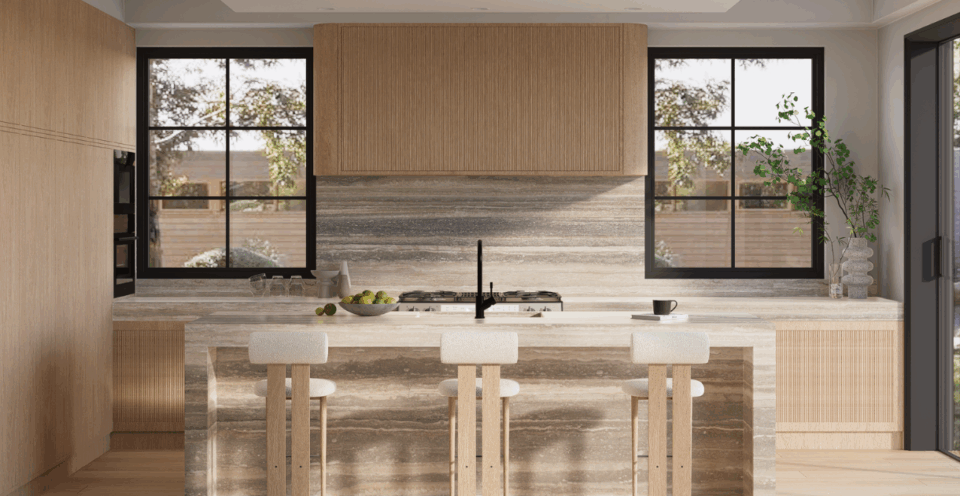
Stone shown in cover image: Golden Striato
When choosing a surface for a kitchen benchtop, bathroom vanity or feature wall, there’s more to consider than colour alone. Pattern depth, edge detailing, durability and material composition all play a part in how the finished project looks and performs.
Printed mineral slabs and YDL Mineral slabs offer different approaches to surface design. Understanding these differences can help you choose a material that delivers the right balance of aesthetics, performance and practicality.

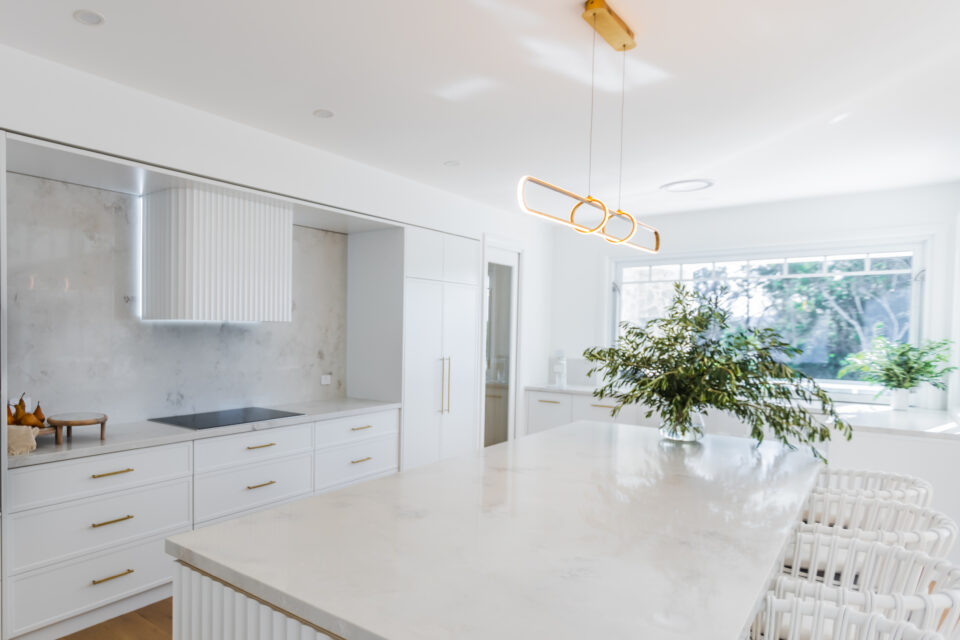
Stone shown: Arctic White
What Is the Difference Between Printed and Mineral Slabs?
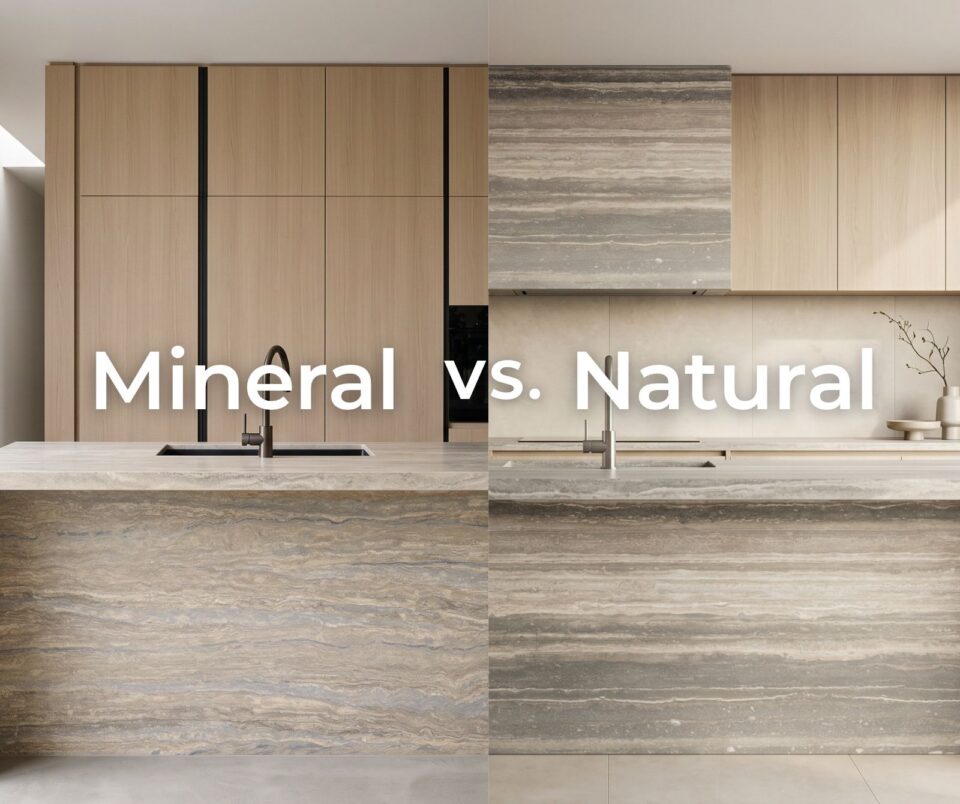
Printed mineral slabs use a surface-applied design to recreate the look of natural stone, including marble-inspired veining and other decorative patterns. Depending on the manufacturing process, the design may be concentrated on the surface, meaning cutting or profiling the slab can reveal a different appearance along the edge.
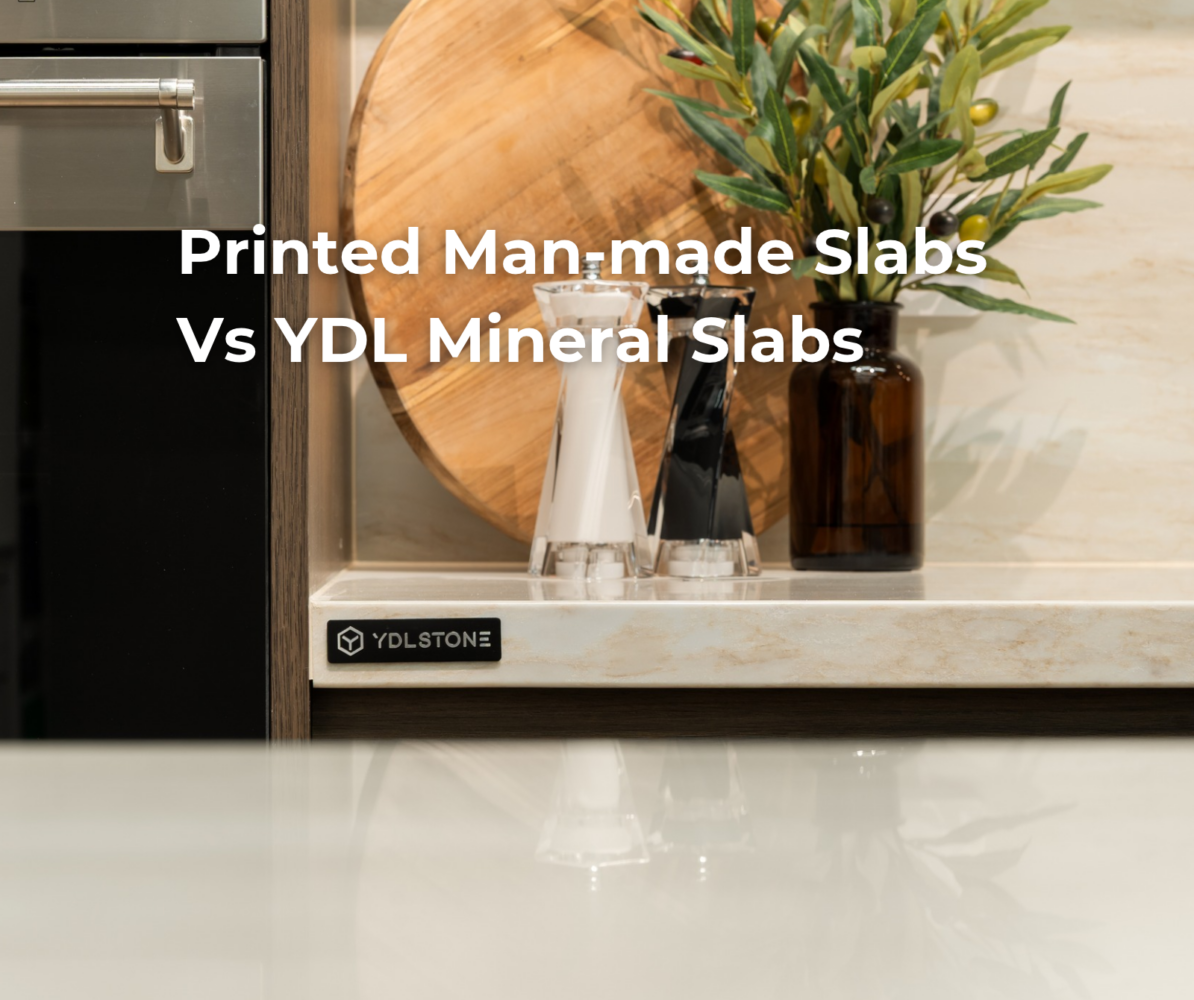
YDL Mineral slabs take a different approach. Made from a blend of minerals and recycled materials, including at least 85% recycled material, they combine the appeal of natural stone with the benefits of a modern mineral surface. The range is also crystalline silica-free, protecting workers and homeowners while matching the durability of traditional materials.
One of the key differences is how the pattern is incorporated into the material. Rather than relying solely on a surface print, YDL Mineral integrates colour and pattern into the slab’s composition. This helps create a more consistent appearance across exposed edges, mitres and profiled details.
For projects where the finish needs to look considered from every angle, that distinction can make a real difference.
Composition and Fabrication Safety
Material composition is an important consideration, not only for the finished project but also for the people involved in fabrication.
YDL Mineral is crystalline silica-free, offering an alternative to traditional high-silica engineered stone. Its formulation incorporates natural minerals and at least 85% recycled material, bringing material innovation and recycled content together in one surface.
The range also carries GREENGUARD, GREENGUARD Gold and NSF certifications, addressing considerations such as indoor air quality and food-contact suitability.
Printed mineral slabs vary in their composition and manufacturing methods. Some are porcelain or other sintered surfaces, while others use different substrates and production processes. Their fabrication requirements and safety considerations can differ, so it’s important to check the technical information for the specific product.
For fabricators, understanding the material is essential. Always follow the manufacturer’s fabrication and installation guidelines, together with relevant workplace health and safety requirements.

Stone shown: Astoria
Pattern, Veining and Edge Detail
The difference between surface printing and an integrated pattern is often most noticeable once a slab has been cut and installed.
Benchtop edges, waterfall ends, mitred aprons and shaped profiles all bring the edge of the material into view. If a printed design doesn’t continue through the slab, the finished edge may look different from the main surface. The extent of this difference depends on the product and how its design has been applied.
With YDL Mineral, colour and pattern are integrated into the material, helping maintain visual continuity across exposed edges and detailed finishes. This makes it particularly well suited to designs where the edge is just as important as the surface itself.
For kitchen islands and statement vanities, details such as a mitred apron can elevate the entire design. We recommend discussing edge profiles and pattern layout with your fabricator early in the process. Reviewing the slab and planning the cuts beforehand helps achieve a more cohesive finish and makes the most of the material.
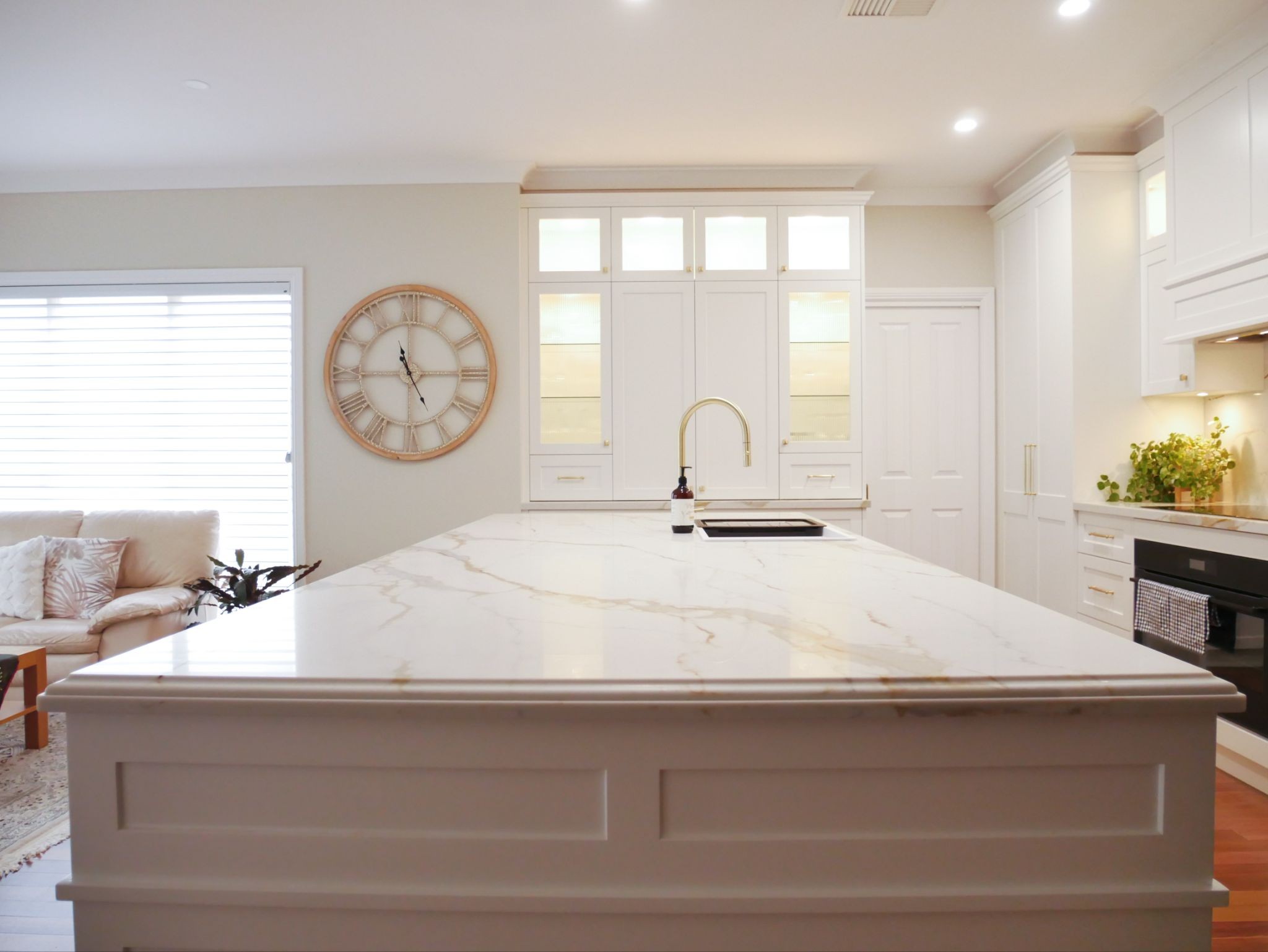
Bella Oro with a Lamb’s Tongue Edge (credit: @harringtonkitchens)
Everyday Performance and Maintenance
A benchtop needs to look good, but as an important piece of your home, it also needs to stand up to everyday use.
YDL Mineral surfaces are non-porous and offer high stain resistance, along with scratch and heat resistance. They require minimal maintenance and don’t need periodic sealing. For routine cleaning, warm soapy water and a suitable pH-neutral cleaner are generally all that’s needed.
As with any surface, a few simple precautions will help preserve its appearance. Use a chopping board when preparing food and place hot cookware on a trivet or heat pad rather than directly on the benchtop. Sudden temperature changes can cause thermal shock and damage the surface.
YDL Mineral is designed for interior applications, making it an excellent choice for kitchen benchtops, bathroom vanities, splashbacks and feature surfaces. As with any mineral surface, following the recommended care and installation guidelines will help maintain its appearance over time. We recommend discussing the intended application with our team to ensure the material is suited to your project.
Printed surfaces, including porcelain, offer a range of design and performance characteristics depending on the product. When comparing materials, it’s worth looking beyond the surface appearance to consider composition, pattern continuity, fabrication requirements and the finish you want to achieve. For interior projects where detailed edges, integrated pattern and a crystalline silica-free composition are priorities, YDL Mineral offers a compelling combination of design and practical performance.
For interior benchtops and vanities, both options can deliver low-maintenance performance. The deciding factors often come down to material composition, pattern continuity and the finished appearance of edges and profiles.
Which Surface Is Right for Your Project?
Both printed mineral slabs and YDL Mineral have their place, but the right choice depends on what matters most to your project.
Printed mineral surfaces can be a practical option when budget or a specific decorative finish is the main consideration. Their suitability for outdoor use and resistance to fading in direct sunlight can vary depending on the product. Porcelain, in particular, offers a wide variety of designs and technologies, including full-body veining, and can perform well in both interior and exterior settings, depending on the product specifications.
For interior projects where design detail, material composition and long-term appearance are priorities, YDL Mineral offers several compelling advantages. Its crystalline silica-free composition and integrated pattern make it an appealing choice for contemporary kitchens, bathroom vanities, splashbacks and feature surfaces.
The benefits become particularly apparent in designs featuring waterfall islands, mitred edges and detailed profiles. Because colour and pattern are incorporated into the material, YDL Mineral helps create a more cohesive finish across the slab and its exposed edges. Combined with its non-porous composition and low-maintenance care requirements, it offers a considered solution for spaces that need to balance visual impact with everyday practicality.
For designers, builders and stonemasons, the ability to achieve a consistent finish while working with a crystalline silica-free material is another important consideration. When these factors are central to the brief, YDL Mineral is well worth putting at the top of the shortlist.
Ultimately, choosing a surface is about looking beyond the initial appearance and considering how the material will perform, how it will be fabricated and how it will contribute to the finished design. For many interior applications, YDL Mineral brings these considerations together in one versatile surface.
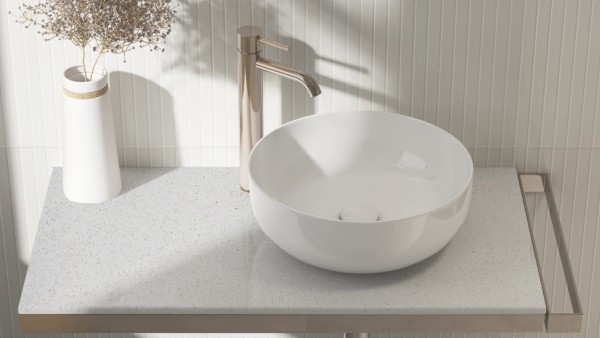
Explore YDL Mineral
At YDL Stone, we believe the right surface should bring together thoughtful design, practical performance and quality detailing. Our Mineral collection has been developed with these priorities in mind, giving designers, builders, stonemasons and homeowners more options when planning their next project.
Explore the YDL Mineral range, compare colours and finishes, and speak with our team about the requirements of your project. Visit a YDL Stone showroom or get in touch to discover how YDL Mineral can bring your design to life.
Related Article
Explore more from our blog
Discover more expert tips, design ideas, and surface insights to inspire your next project.