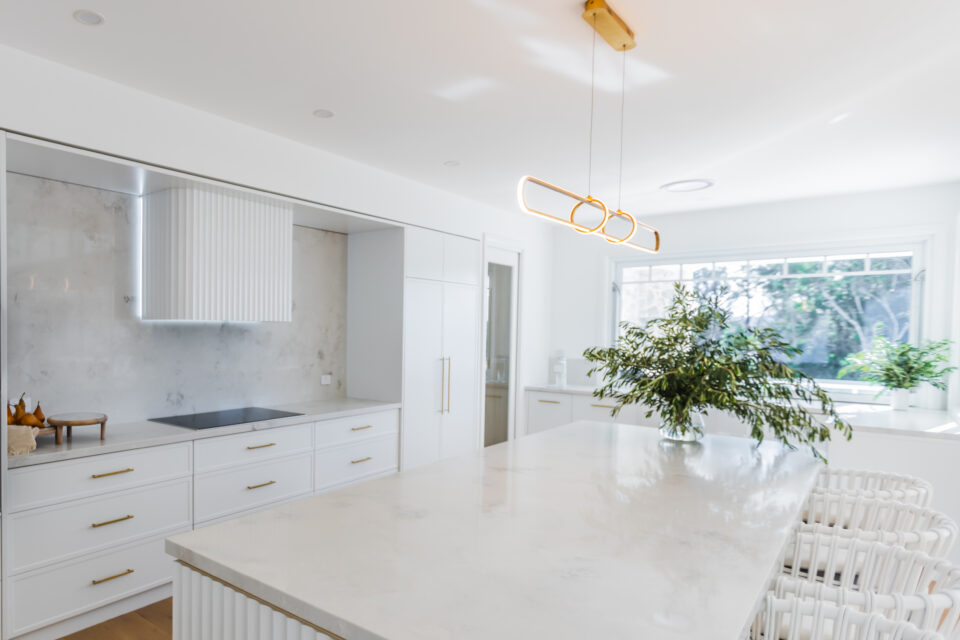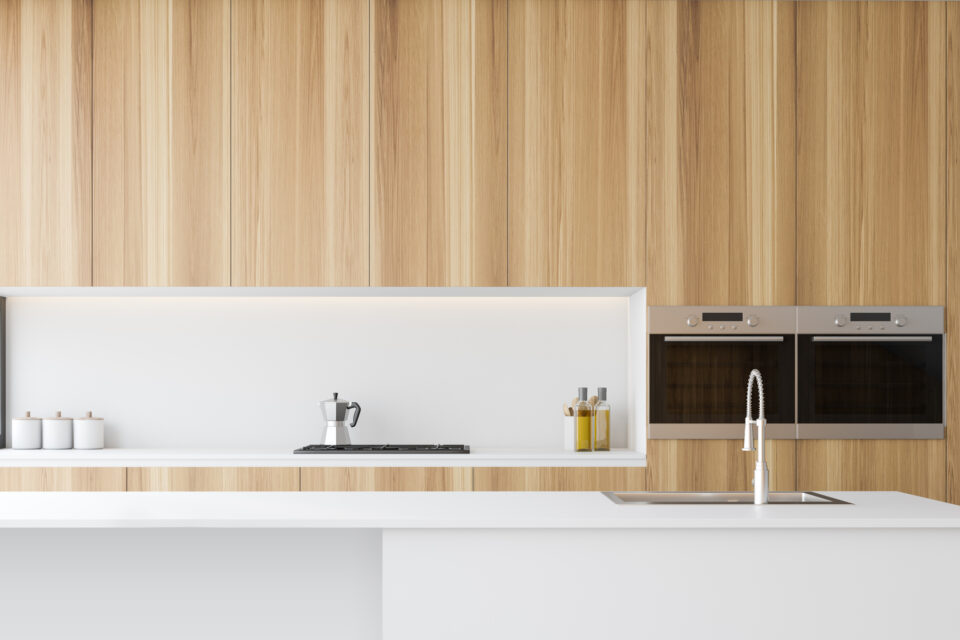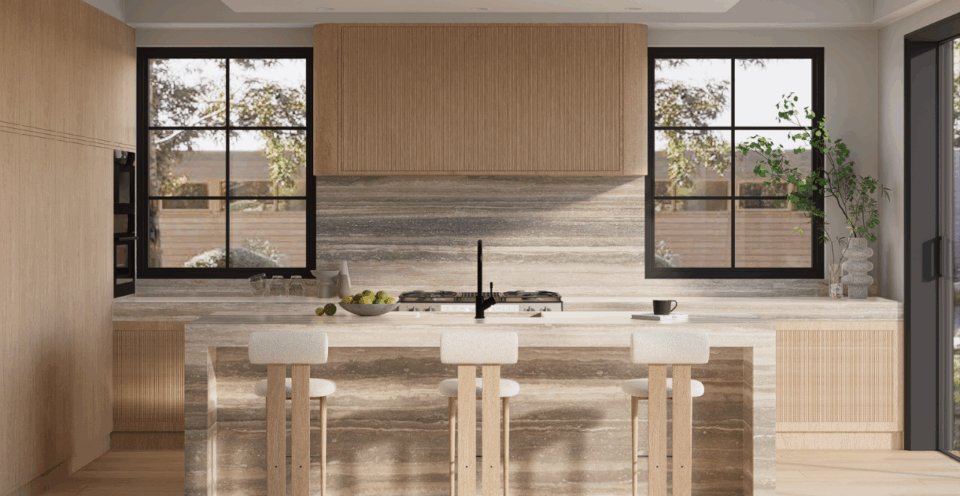
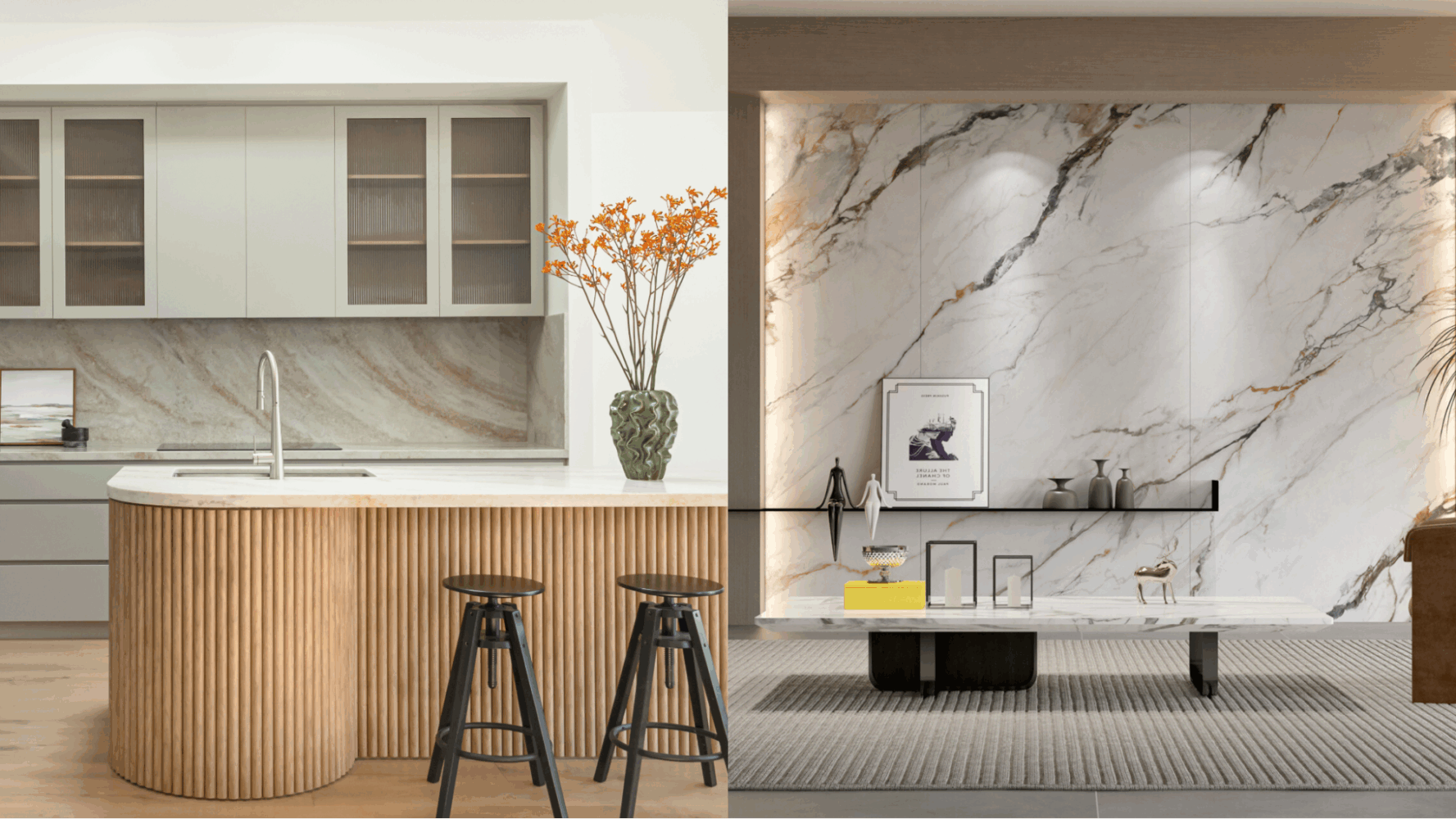
If you’re in the market for new benchtops, splashbacks, or feature surfaces, you’ve probably encountered two terms that keep coming up: mineral stone surfaces and porcelain surfaces. Both are incredibly popular in Australian design right now, but they’re not the same thing, and choosing between them matters more than you might think.
The right choice depends on where you’re installing them, how you’ll use them, and what aesthetic you’re after. At YDL Stone, we work with builders, renovators, and homeowners every day to help them navigate these choices. Our Mineral stone and Porcelain ranges each have unique strengths, and understanding the differences will ensure you select the right material for your space, budget, and lifestyle. Let’s break down what you need to know.
What’s the Fundamental Difference?
Mineral stone surfaces are engineered from natural minerals, binding resins, and recycled materials. Our mineral stone range eliminates crystalline silica entirely – using at least 80% recycled glass instead. This creates revolutionary crystalline silica-free stone surfaces that are safer for fabricators while maintaining exceptional performance.
On the other hand, porcelain surfaces are created by firing refined clay and natural minerals at extremely high temperatures, producing a dense, non-porous ceramic material now available in large-format slabs.
Simply put: mineral stone benchtops are engineered composites (like traditional engineered stone, just safer), while porcelain benchtops are large-format ceramics.
Where Can You Use Them?
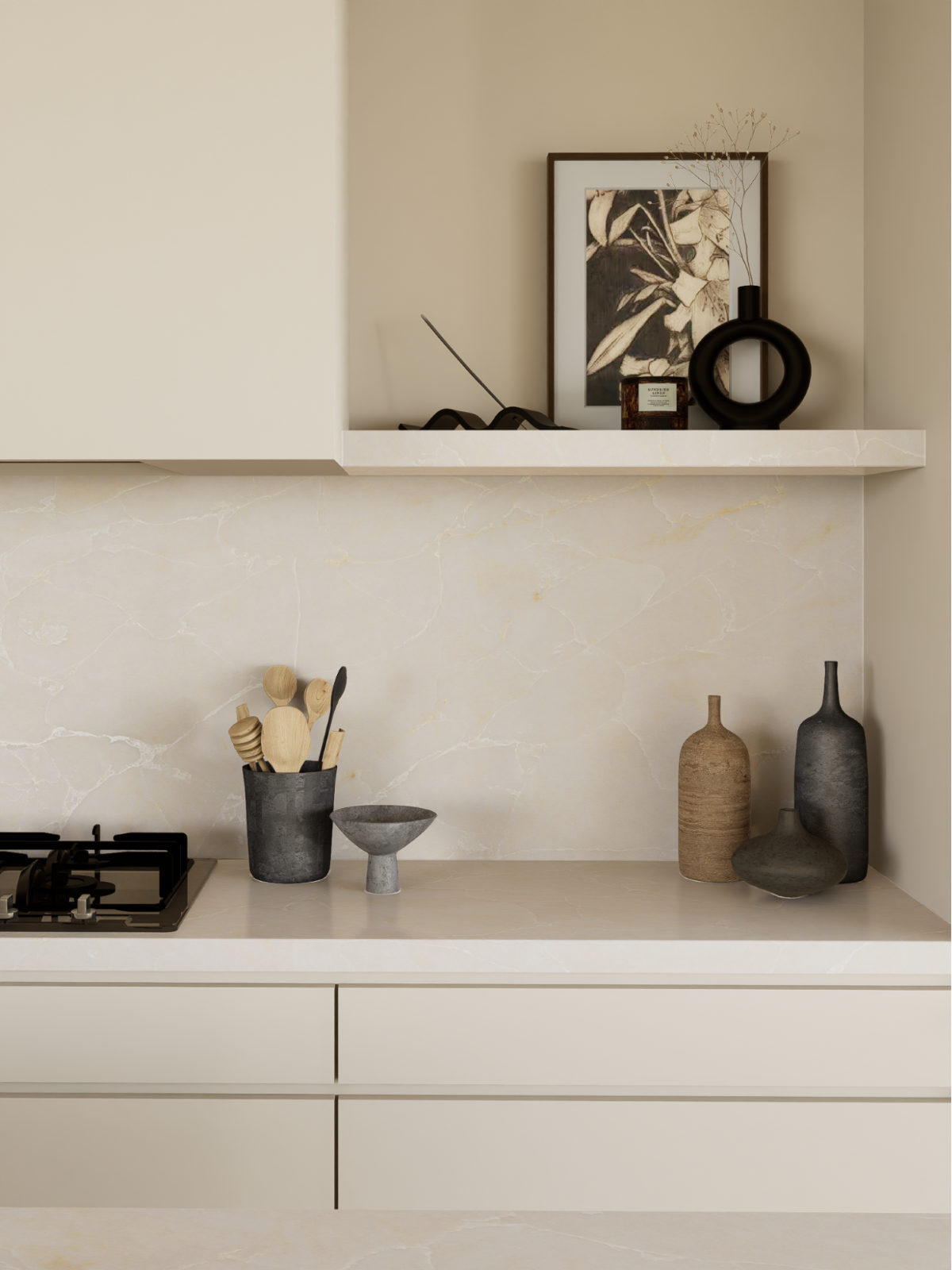
Mineral stone surfaces are strictly for indoor use. They’re perfect for interior kitchens, bathrooms, and feature walls, but extended sunlight exposure can cause discolouration.
Porcelain surfaces work pretty much everywhere. UV-resistant and weather-proof, porcelain surfaces excel indoors – but it’s its durability that makes it ideal for projects like an outdoor kitchen or a new facade. For Australian indoor-outdoor living, this versatility is invaluable.
To put things into perspective, if you’ve got an outdoor project, porcelain is your only option. But if it’s an indoor only? Both excel.
Aesthetics
Mineral stone surfaces are great at recreating natural stone beauty. Rich depth, subtle variations, and realistic veining closely mimic marble and granite. Each slab varies slightly, creating a unique character. Mineral stone options range from understated Rosemee with soft cream tones to dramatic Golden Striato with bold golden veining.
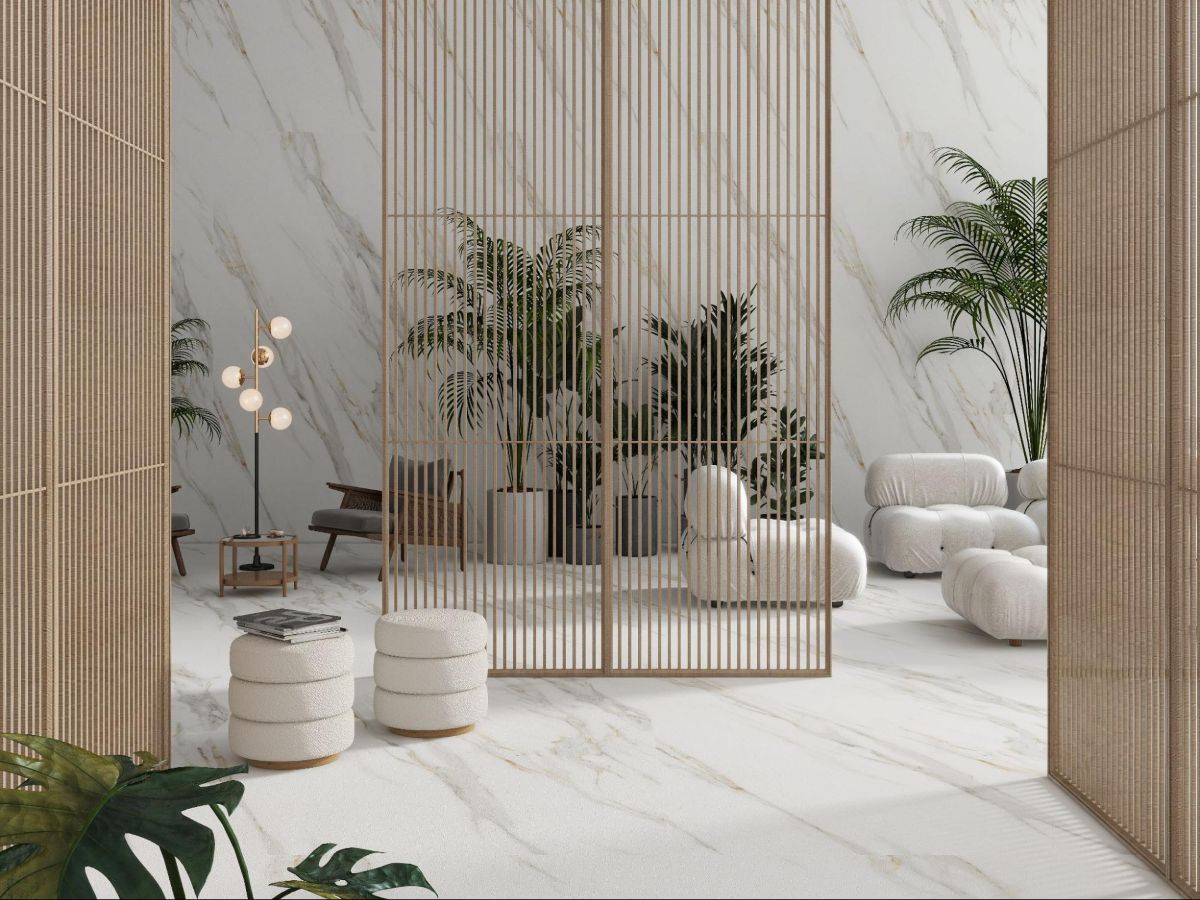
Porcelain surfaces master replication. They faithfully recreate marble, travertine, and concrete with remarkable consistency. Category 1 features surface patterns (like Ivory Travertine), while Category 2 uses full-body vein technology where patterns run throughout the entire slab. This means cut edges show continuous veining, as seen in Lago Oro.
Durability
Both materials are built to last, but they shine in different conditions.
Mineral stone surfaces heat resistance, scratches, stains, and daily wear exceptionally well. They require no sealing and maintain their appearance beautifully in high-traffic areas. Trivets are recommended for very hot items, and like most engineered surfaces, extreme impacts can potentially cause chips. Importantly, they’re designed specifically for interior conditions.
Porcelain surfaces are exceptionally hard and dense – among the hardest surface materials available. They’re extremely scratch-resistant (harder than most natural stones), highly heat-resistant, completely non-porous (won’t stain or harbour bacteria), UV stable (won’t fade in sunlight), and frost-resistant. The ceramic composition makes porcelain particularly outstanding for outdoor applications where weather resistance is essential.
Case in point, both are tough and low-maintenance for indoor use. And while porcelain’s durability makes it the winner for weather resistance and suitability for outdoor projects, our Babylon or Rustico porcelain should never be overlooked for kitchen benchtops and other interior surfaces.
Care and Maintenance
Both materials are remarkably low-maintenance:
Both require:
- Daily cleaning with warm, soapy water and pH-neutral detergent
- No sealing needed
- Trivets for hot items
- Cutting boards to protect surfaces
- Avoidance of harsh chemicals
Both come with YDL Stone’s 10-year limited warranty.
Composition and Safety: What Matters
Traditional engineered stone contains 90%+ crystalline silica, raising serious fabricator health concerns.
YDL Stone’s Mineral range eliminates this entirely, using natural minerals and at least 80% recycled glass—no crystalline silica. This has earned us Greenguard, Greenguard Gold, and NSF certifications, representing YDL Stone’s commitment to leading the future of sustainable surfaces.
Porcelain surfaces contain refined clays, feldspar, and natural minerals—fired at over 1200°C to become completely inert.
The verdict: Both are safe end-use products. Mineral offers added fabricator safety benefits.
Applications
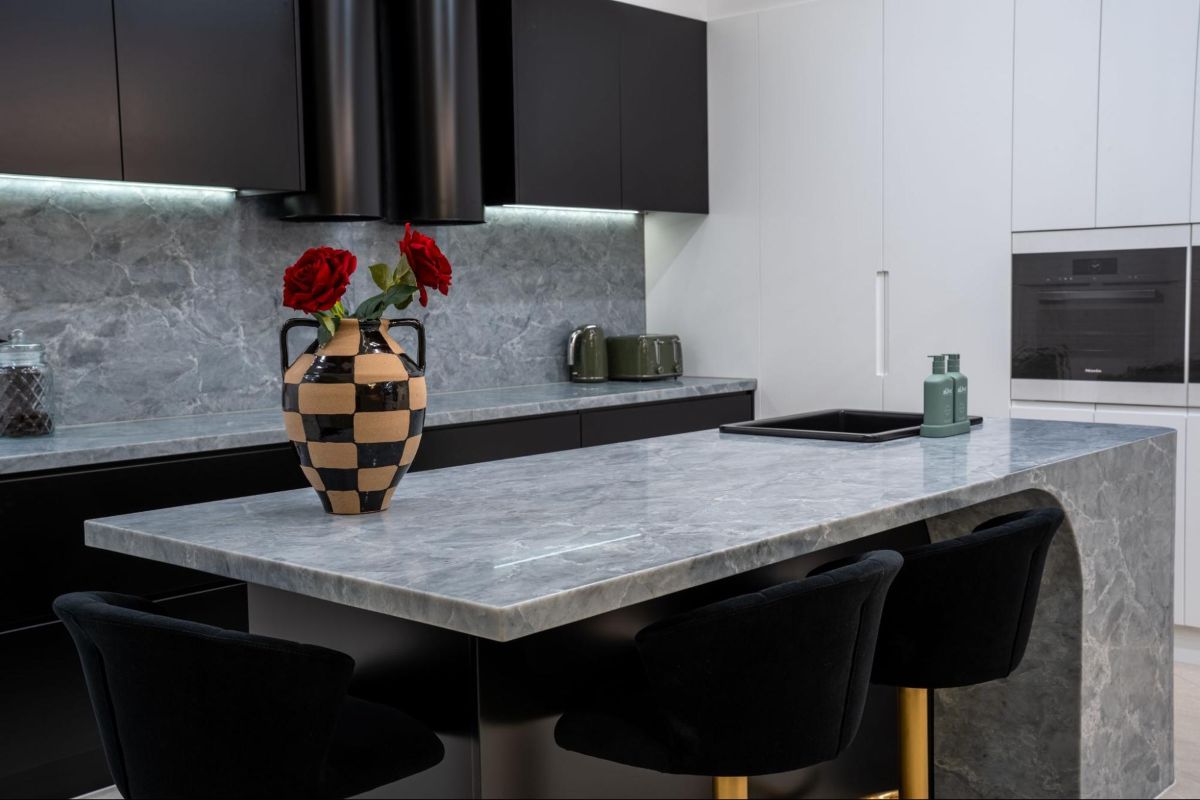
Mineral stone benchtops work best for: Kitchen benchtops, bathroom vanities, splashbacks, feature walls, commercial reception desks, and any indoor application. The Special Edition range, featuring Mahal Ivory and Eos Illumina, suits high-end developments.
Porcelain benchtops excel in: All indoor applications PLUS outdoor ones, including high-traffic commercial floors, and areas with direct sunlight.
Which Should You Choose?
Choose mineral stone surfaces if:
- Your project is entirely indoors
- You want organic depth and natural aesthetics
- You prioritise cutting-edge safety and sustainability
- You’re working on premium interiors
Choose porcelain surfaces if:
- You need outdoor durability and UV resistance
- You want indoor-outdoor versatility
- You prefer consistent patterning
- Full-body veining matters for your design
Why not both? Many projects use both strategically—mineral surfaces like Calacatta Combo or Summer Breeze for interiors, and porcelain outdoors.
Experience the Difference at YDL Stone
The best way to understand these materials is to see them in person. Visit a YDL Stone’s showrooms in Victoria, New South Wales, or Queensland to experience both ranges first-hand.
Whether you choose mineral stone surfaces or porcelain surfaces, YDL Stone’s commitment to quality and sustainability ensures you’re making a sound investment. Visit our care and maintenance guide to learn more about keeping your surfaces looking their best.
Related Article
Explore more from our blog
Discover more expert tips, design ideas, and surface insights to inspire your next project.