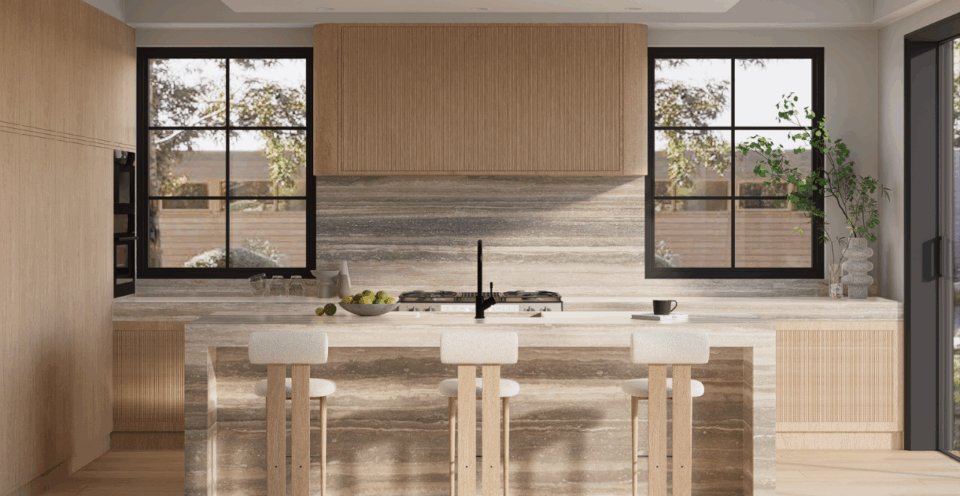
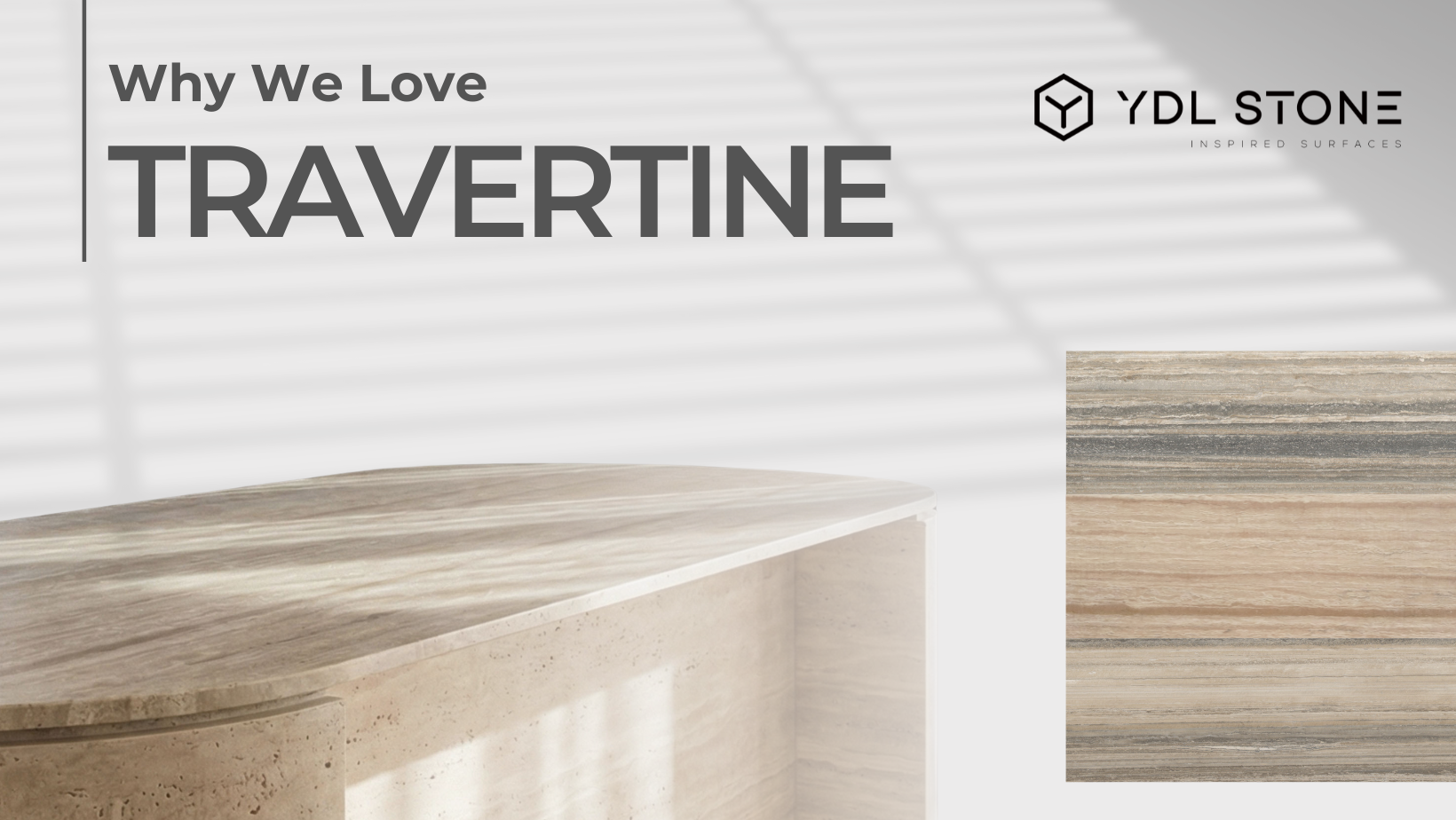
Whilst we love all of our natural stone varieties, there will always be certain stones that capture our imagination, and which you always find yourself coming back to from a design perspective. For me, and for many of us at YDL Stone, that variety would be travertine, and that is by no means an unpopular opinion.
Travertine has been used for thousands of years, yet it continues to feel fresh and relevant in Australian homes today. Its warm, earthy tones, distinctive texture and subtly natural character give it a quiet confidence that works equally well indoors and out. At YDL Stone, we see more clients choosing travertine for everything from living room floors to outdoor entertaining areas, and whilst it may not be the most flashy at first glance, travertine’s appeal lays in that subtle versatility.
This article explores what makes travertine special, how it is formed, the practical benefits it offers, and the options currently available in our natural stone range.
What is Travertine?
Travertine is a form of limestone created by the slow deposition of mineral-rich water from hot springs. As the water cools and loses carbon dioxide, calcium carbonate precipitates and builds up in layers. Over time this process forms the porous, textured stone we know today.
The natural cavities and organic patterns that result give travertine its distinctive look. Depending on how the stone is cut, these features can appear as flowing veins or softer, more cloud-like markings. Its typical colours range from soft creams and beiges through to warmer tans and silvery greys, with occasional richer tones created by iron and other minerals.
Where Travertine Comes From
Travertine is quarried in several parts of the world, with the main commercial sources today including Turkey, Italy, Mexico, Iran and Peru.
Turkey is currently the largest global supplier and is well known for producing light, ivory-coloured material, such as the soft, sandy tones of our Travertine Classic variety. Italy remains the historic home of classic Roman travertine, with active quarries still operating near Tivoli and Guidonia outside Rome. For a beautiful look at what Italian travertine has to offer, our Silver Travertine and Ocean Blue Travertine varieties are sure to impress; their understated, moodier tones and timeless aesthetics showcasing the depth that this natural stone can bring to a space.
Mexico and Peru are significant modern exporters that offer a range of colours and textures. Iran is recognised for varieties that include richer walnut, gold and silver tones.
Why Travertine Appeals to Australian Homes
One of the strongest reasons people choose travertine is its aesthetic appeal. The warm, neutral palette and natural texture bring a sense of calm and grounding to a space. This neutrality also allows it to pair beautifully with timber, soft fabrics and both contemporary and more traditional interiors. The organic surface simply cannot be perfectly replicated by synthetic materials, which is part of its lasting legacy.
Travertine can perform well in Australian conditions when correctly selected, treated and installed. It is often used in high-traffic indoor areas. For outdoor patios, pool surrounds and garden paths, the suitability of the selected stone and finish should be assessed based on the installation requirements, slip resistance and heat performance.
When properly sealed and maintained, travertine can retain its beauty for decades, adding long-term value to a home.
Practical Benefits and Care
Travertine is relatively straightforward to look after. A mild, pH-neutral cleaner is usually all that is needed for regular cleaning. Acidic products should be avoided, as they can etch the surface. A quality impregnating sealer helps protect against stains and should be reapplied as recommended, often every several years depending on use and exposure, though it should be noted that this won’t stop acid etching from occurring.
YDL Stone’s Travertine Collection
We currently offer three carefully selected travertines that showcase the material’s range of colour and texture.
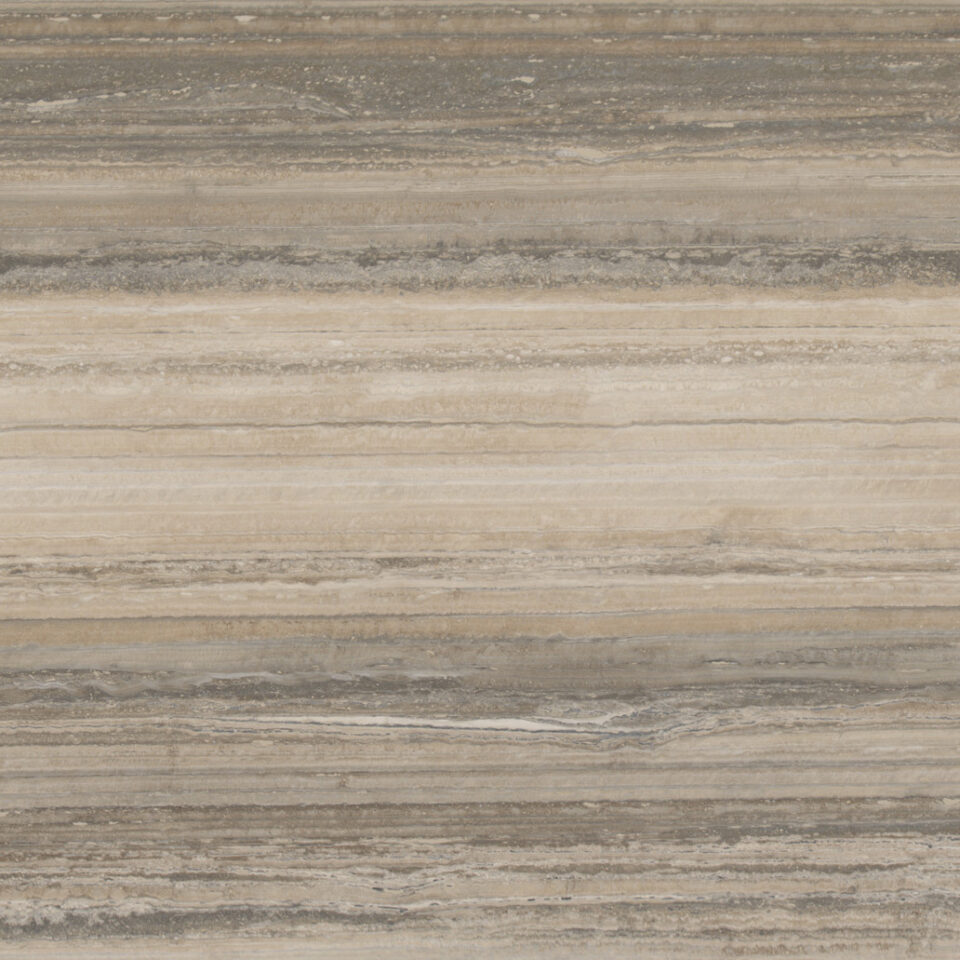
Ocean Blue Travertine
Quarried in Italy, Ocean Blue Travertine presents soft silver, earthy and taupe tones with refined linear movement. The filled and honed finish creates a smooth, consistent surface that works well in both residential and commercial settings.
View Here: https://www.ydlstone.com.au/products/ocean-blue-travertine/
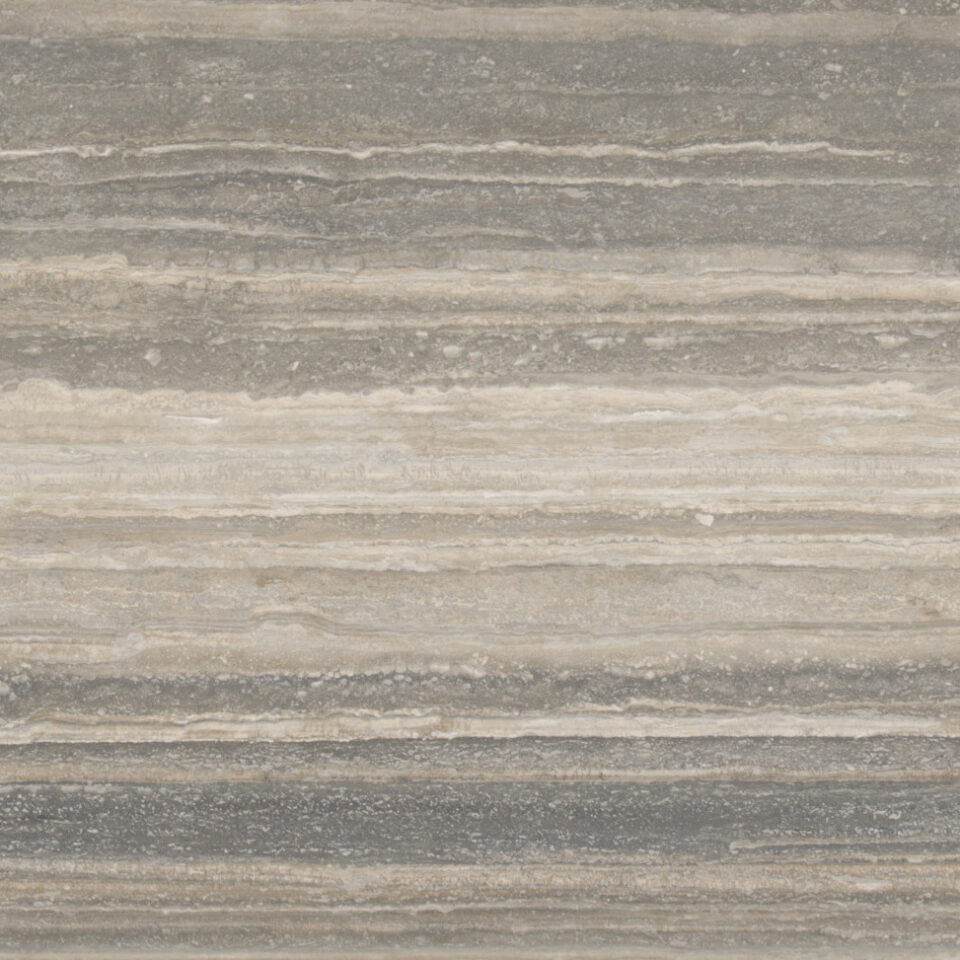
Silver Travertine
Also from Italy, Silver Travertine features a soft beige base with subtle silver horizontal veining that adds gentle texture and depth. Its understated tones and timeless character make it suitable for benchtops, flooring, walls and outdoor applications.
View Here: https://www.ydlstone.com.au/products/silver-travertine/
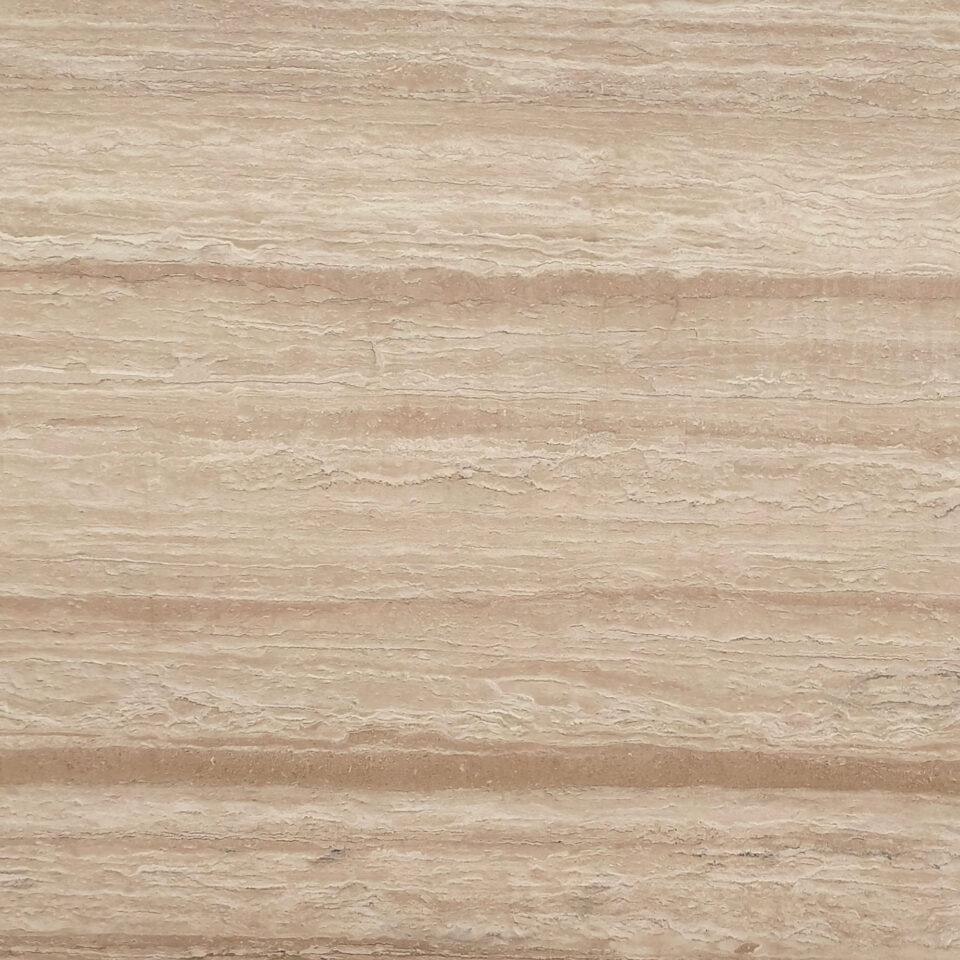
Travertine Classic
Quarried in Turkey, Travertine Classic offers soft sandy tones with gentle organic movement. The filled and honed finish preserves the stone’s natural character while providing a durable, elegant surface that suits flooring, feature walls and larger applications.
View Here: https://www.ydlstone.com.au/products/travertine-classic/
Each of these stones brings its own personality while sharing the warmth and versatility that define good travertine.
Work With YDL Stone Today
If you have been considering travertine for a renovation or new build, the best next step is to see the stones in person. Our showrooms display a range of slabs under real lighting so you can appreciate the colour, texture and movement accurately.
You can make a booking here, with convenient locations across Victoria, Queensland and New South Wales. Our experienced team is ready to talk through the options, answer questions about sealing and care, and help you find the travertine that best suits your space and lifestyle.
Travertine offers a rare combination of natural beauty, practical performance and lasting character, and it is always a pleasure to be able to support people in finding the right stone for their project. So, speak with our team today, and see how we can help you bring a little natural beauty to your design.
Related Article
Explore more from our blog
Discover more expert tips, design ideas, and surface insights to inspire your next project.